
Scientists at the Institut Pasteur and Inserm have discovered that maternal intake of dietary emulsifiers in mice can profoundly disrupt the gut microbiota of their offspring. These initial alterations in the intestinal bacterial community are associated with elevated risks of developing chronic inflammatory bowel disorders and obesity in adulthood. The research suggests potential intergenerational health consequences, emphasizing the urgency for parallel investigations in humans to explore how prenatal and early-life exposure to emulsifiers might shape lifelong well-being. Details of the study appear in Nature Communications.
Emulsifiers serve as common food additives in processed products, enhancing texture consistency and prolonging shelf stability. They frequently appear in items like dairy products, baked confections, ice cream, and certain powdered infant formulas. Although ubiquitous in modern diets, the long-term health implications of these compounds, particularly their effects on the human gut microbiome, remain underexplored by researchers.
How Researchers Carried Out the Experiment
The investigation was spearheaded by Benoit Chassaing, who holds the position of Inserm Research Director and leads the Microbiome-Host Interactions laboratory, an Inserm unit based at the Institut Pasteur. For this experiment, female mice received diets supplemented with two prevalent emulsifiers—carboxymethyl cellulose (E466) and polysorbate 80 (E433)—beginning ten weeks prior to conception and extending throughout gestation and lactation periods. Subsequently, the team analyzed the gut microbiota composition in the pups, none of whom had ever ingested these emulsifiers directly.
Findings revealed that the offspring exhibited significant shifts in their gut bacterial populations as early as the first few weeks of life. This developmental window holds particular significance, as it coincides with the natural transfer of maternal microbiota to newborns via intimate physical interactions.
Breakdown in Gut Microbiota-Immune System Dialogue
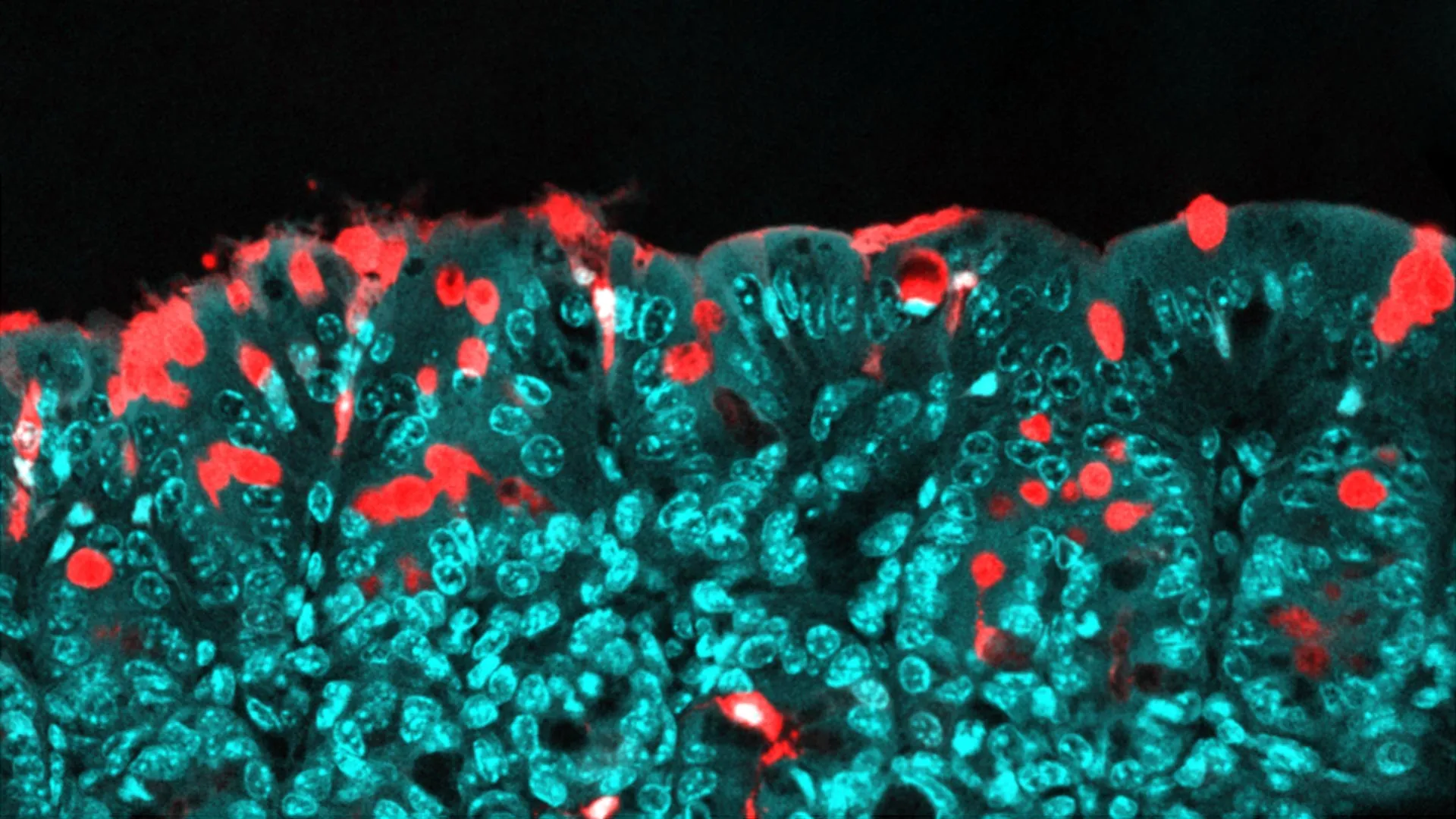
The modified gut microbiome in these young mice featured elevated populations of flagellated bacteria, microbial species recognized for their ability to stimulate immune responses and foster inflammatory processes. Investigators further noted an increased proximity of bacteria to the intestinal epithelial layer. This phenomenon, termed bacterial encroachment, prompted the premature sealing of specific gut transport pathways. Normally, these routes permit the passage of minor bacterial components across the gut barrier, enabling the immune system to identify and adapt to the host’s resident microbiota without overreacting.
In the offspring of mothers exposed to emulsifiers, the accelerated closure of these pathways interrupted the essential dialogue between the gut bacteria and the immune apparatus. By the time these mice matured into adults, the impaired communication resulted in heightened immune reactivity and persistent inflammation. Consequently, the animals faced substantially greater susceptibility to inflammatory intestinal diseases and obesity. The study establishes a clear connection between microbiota perturbations during early life in mice—occurring without any direct emulsifier exposure—and the subsequent emergence of these debilitating chronic health issues.
Potential Ramifications for Human Populations
Benoit Chassaing, the study’s senior author, remarks, “It is essential that we deepen our knowledge of how dietary choices can affect the health outcomes of subsequent generations. This research stresses the importance of scrutinizing and potentially regulating food additives, particularly those present in powdered infant formulas, which are ingested during a pivotal phase for establishing the newborn’s microbiota. Our next steps involve launching clinical studies to examine the transmission of microbiota from mother to child, comparing scenarios with and without maternal consumption of food additives, as well as direct infant exposure through formula feeding.”