
A groundbreaking licensed IVF procedure in the UK, designed to minimize the risk of mitochondrial diseases and performed in Newcastle, has resulted in the birth of eight healthy babies, according to recently published research.
None of these eight infants display any indications of mitochondrial DNA-related disorders. The group consists of four girls and four boys, including one pair of identical twins, all born to seven mothers who faced a significant risk of passing on severe conditions due to mutations in their mitochondrial DNA. The results, announced on July 16 by the Newcastle-based team that first developed mitochondrial donation techniques using fertilized human eggs, demonstrate the effectiveness of this innovative treatment, called pronuclear transfer, in substantially lowering the chances of otherwise untreatable mitochondrial DNA diseases.
Detailed in two separate articles in The New England Journal of Medicine, these findings outline the reproductive and clinical results from pronuclear transfer procedures conducted so far. Every baby was born in good health, achieving all expected developmental benchmarks, while the mothers’ harmful mitochondrial DNA mutations were either completely absent or present at such minimal levels that they pose virtually no risk of causing illness.
This pioneering method was developed using human eggs by researchers from Newcastle University and the Newcastle upon Tyne Hospitals NHS Foundation Trust, with funding from Wellcome and NHS England.
One mother, whose baby girl was born after undergoing mitochondrial donation, shared her feelings: “As parents, our greatest wish was always to provide our child with a strong, healthy beginning in life. The mitochondrial donation IVF process made this dream a reality. After enduring years of doubt and worry, this treatment restored our hope—and ultimately delivered our precious baby. Watching them now, brimming with vitality and endless potential, fills us with profound thankfulness. Thanks to scientific progress, we were given this opportunity.”
Another mother, who welcomed a healthy baby boy, expressed: “We are now overjoyed parents of a thriving infant—a clear triumph of mitochondrial replacement therapy. This remarkable innovation has dispelled the dark shadow of dread that once hung over our family.
With gratitude for this extraordinary progress and the unwavering support we received, our family feels whole at last. The weight of mitochondrial disease has been removed, replaced by optimism, happiness, and immense appreciation.”
Through the NHS Mitochondrial Reproductive Care Pathway, women with mitochondrial disease can access mitochondrial donation via a research study, alongside various other fertility choices.
Professor Sir Doug Turnbull, a key member of the Newcastle team from Newcastle University, commented: “Mitochondrial disease can wreak havoc on families’ lives. This latest development brings renewed optimism to numerous women at risk of transmitting this condition, offering them the possibility of raising children free from its grip. Operating within the structured and carefully overseen NHS framework, we provide mitochondrial donation through a research study to eligible women across the UK.”
Mitochondrial DNA Disease
Each year, approximately one in every 5,000 children is born carrying mitochondrial DNA mutations capable of triggering severe, life-altering diseases. Mitochondria serve as the cell’s powerhouses, generating the energy essential for bodily functions, and they house a compact segment of DNA that provides partial instructions for this energy production process. Detrimental mutations in this mitochondrial DNA can lead to insufficient energy supply, especially impacting high-energy-demand organs such as the heart, muscles, and brain. Since mitochondrial DNA is inherited exclusively from the mother, these disorders are transmitted from mothers to their offspring. While boys can suffer from the condition, they do not pass it on to the next generation. Despite extensive research efforts spanning decades, no effective cure exists for individuals affected by mitochondrial DNA diseases.
With no viable treatments available to cure mitochondrial DNA diseases, researchers have turned to IVF-derived methods aimed at decreasing disease transmission by curbing the inheritance of faulty mitochondrial DNA mutations from mother to child. The innovative IVF technique known as pronuclear transfer, which received legal approval in the UK in 2015, specifically targets the reduction of mitochondrial DNA disease risk in offspring of women harboring substantial quantities of pathogenic mitochondrial DNA mutations.
The Newcastle researchers have incorporated pronuclear transfer into a comprehensive research study, complemented by an array of reproductive alternatives tailored for women at risk of passing mitochondrial disease to their children.
Pronuclear Transfer
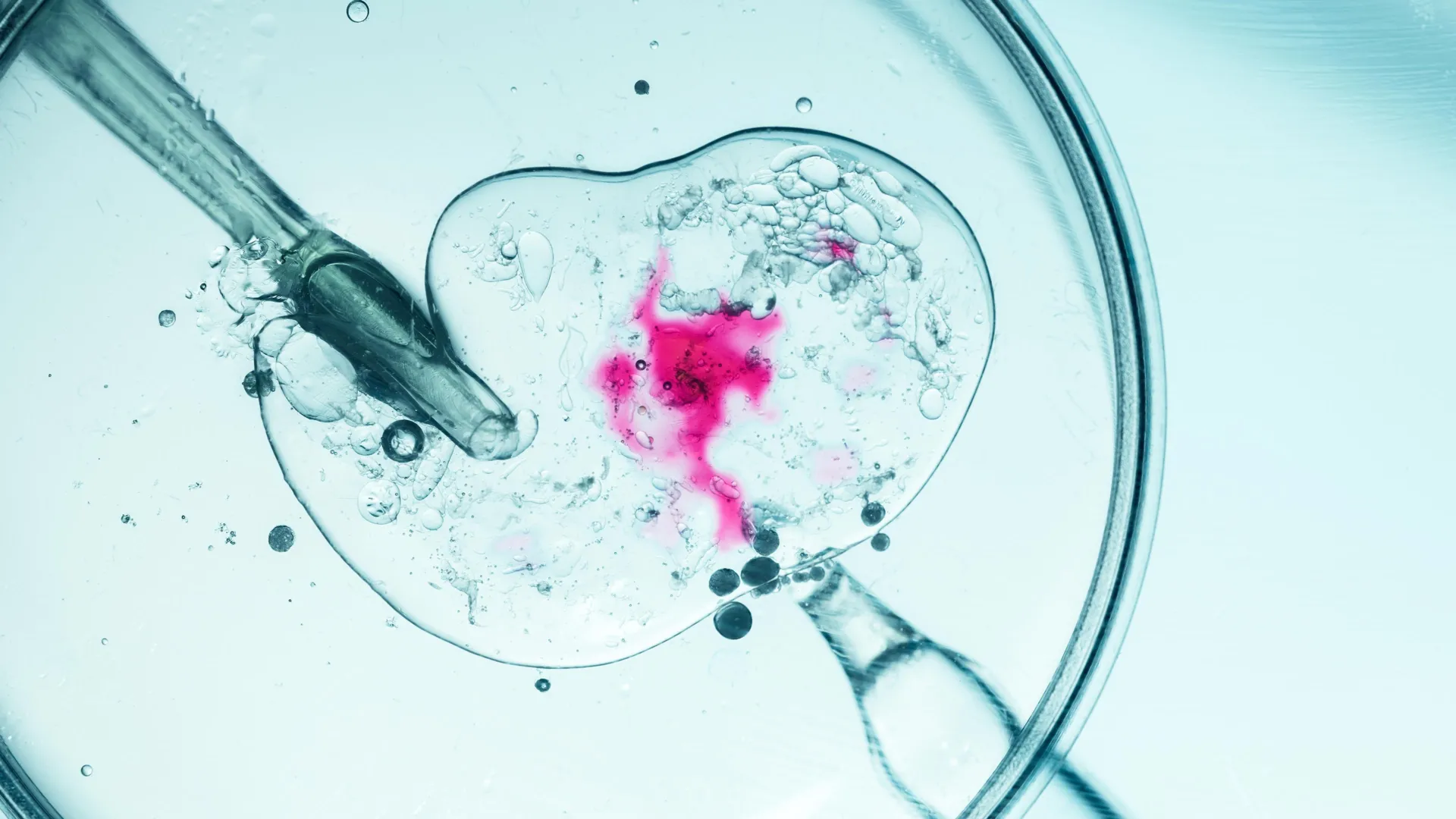
Pronuclear transfer is executed post-fertilization of the egg. The process entails moving the nuclear genome—encompassing all the genes responsible for defining personal traits like eye color, hair type, and stature—from a mutated mitochondrial DNA-carrying egg into a donor egg from a healthy woman, from which the nuclear genome has been extracted. Consequently, the embryo acquires its nuclear DNA from the biological parents but derives its mitochondrial DNA primarily from the donor egg.
The Reproductive Outcomes Paper
The Newcastle team, instrumental in refining pronuclear transfer for application in fertilized human eggs, has now released data on the results of these treatments aimed at mitigating mitochondrial DNA disease risks.
In babies born following pronuclear transfer, levels of pathogenic mitochondrial DNA varied from undetectable up to 16% in their neonatal blood samples. Any detected mitochondrial DNA mutations in these infants stem from the inadvertent transfer of maternal mitochondria that encase the nuclear DNA during the transplantation step. This maternal mitochondrial carryover represents a recognized challenge in mitochondrial donation procedures.
Ongoing research by the team is dedicated to gaining deeper insights into this issue and devising strategies to mitigate it effectively.
Professor Mary Herbert, the lead author on the reproductive outcomes paper and a researcher at Newcastle University, stated: “These results provide solid reasons for encouragement. That said, continued investigation into the constraints of mitochondrial donation methods remains crucial to enhancing treatment efficacy further.
At present, mitochondrial donation technologies are classified as risk-reduction interventions primarily because of the maternal mitochondrial DNA carryover that occurs during the procedure. Our continued studies aim to close the divide between mere risk reduction and full prevention of mitochondrial DNA disease by tackling this core challenge head-on.”
Pronuclear transfer is integrated into a holistic program that incorporates preimplantation genetic testing (PGT) to further diminish mitochondrial DNA disease risks. Per HFEA guidelines, pronuclear transfer is reserved for women unlikely to see benefits from PGT alone.
When evaluating the combined PGT and pronuclear transfer program, clinical pregnancies were achieved in 8 out of 22 (36%) patients receiving pronuclear transfer and in 16 out of 39 (41%) undergoing PGT. Pronuclear transfer has yielded eight live births plus one additional ongoing pregnancy, while PGT has produced 18 births. Among the pronuclear transfer offspring, pathogenic mitochondrial DNA mutation levels were either absent or significantly lower than those associated with disease onset.
The Clinical Outcomes Paper
The Newcastle researchers detail the specialized care pathway crafted to deliver optimal support for women carrying harmful mitochondrial DNA mutations. The paper elaborates on the comprehensive monitoring and assistance provided to the mothers of the initial babies born via this method during pregnancy, along with meticulous postnatal follow-up for the infants.
Certain mothers exhibited early symptoms of mitochondrial disease, such as deteriorating vision or cardiac complications. Others had affected relatives and continued to face personal risks of symptom development and transmission.
All eight babies, encompassing the identical twins, entered the world in robust health and have progressed typically in their development—five have encountered no health challenges to date. The researchers observe that three infants surmounted minor early medical concerns, which they do not link directly to the mitochondrial donation process.
The Newcastle team extends guidance and therapeutic interventions to UK women with deleterious mitochondrial DNA mutations. These women receive vigilant oversight throughout pregnancy and postpartum following mitochondrial donation; six of the seven experienced uneventful progressions. One participant encountered a uncommon pregnancy-related issue involving elevated blood fat levels (hyperlipidaemia), which was effectively managed through a low-fat dietary regimen.
The eight babies, including the twins, arrived via either spontaneous vaginal birth or planned caesarean sections. Each had birth weights appropriate for their gestational ages. Pathogenic mitochondrial DNA mutation levels were assessed in blood and urine samples: undetectable in five babies. The remaining three showed modest levels—5% and 9%, 12% and 13%, 16% and 20% in blood and urine, respectively. These figures fall far short of the 80% threshold typically needed for these mutations to manifest clinically. Notably, follow-up at 18 months revealed undetectable levels in blood and urine for the child previously at 5% and 9%.
Every child participates in an 18-month developmental monitoring study, and as of the report date, all were hitting appropriate milestones.
One infant experienced transient startles (neck flexing and eye blinking) starting at 7 months, which spontaneously resolved after three months without intervention. A breastfed baby developed hyperlipidaemia, mirroring the mother’s pregnancy experience, and responded well to a low-fat diet. This same child was identified with an irregular heart rhythm (cardiac arrhythmia), now under control with tapering anti-arrhythmic drugs. (Though PGT-born children lack routine follow-up, one was noted with a cardiac irregularity.) A third child suffered a urinary tract infection, swiftly cleared by antibiotics.
The authors assert that these health matters in the children are unlikely tied to the maternal mitochondrial DNA mutations, given the detected low levels insufficient to provoke symptoms (which require over 80%). Any direct impact from the pronuclear transfer itself would likely produce consistent effects across cases. Nevertheless, extended follow-up is vital to identify any emerging patterns in childhood health.
The team stresses the critical role of long-term monitoring to spot potential trends in pediatric conditions and commits to evaluations through age 5.
Professor Bobby McFarland, Director of the NHS Highly Specialised Service for Rare Mitochondrial Disorders at Newcastle Hospitals NHS Foundation Trust and Professor of Paediatric Mitochondrial Medicine at Newcastle University, served as first author on one paper. He remarked: “Extended observation of mitochondrial donation children is essential, yet these preliminary outcomes are highly promising. Witnessing the happiness and solace these children have brought their families is an immense honor.
Our established follow-up protocol is comprehensive, enabling detection and evaluation of even subtle issues, like urinary tract infections, in pronuclear transfer offspring.”
The Lily Foundation, a charity focused on combating mitochondrial disease, has backed the Newcastle initiatives. Liz Curtis, founder and CEO, declared: “We are thrilled with these published findings. We campaigned tirelessly for this shift to empower families with options. After prolonged anticipation, confirmation of eight babies born via this method—all free of mitochondrial signs—marks a pivotal moment. For countless families, it represents the inaugural genuine prospect of halting this hereditary cycle.”
Fact File
Law—Marking a global milestone after thorough public discourse, scientific scrutiny, and ethical evaluation, the UK approved legalization in 2015, empowering the Human Fertilisation and Embryology Authority (HFEA) to license mitochondrial donation treatments for women highly likely to transmit severe mitochondrial DNA diseases to offspring. Australia has since followed suit with legal changes.
Licence – HFEA oversees and issues licences. Newcastle Fertility Centre, under Newcastle Hospitals NHS Foundation Trust, secured the inaugural licence in 2017 for clinical pronuclear transfer mitochondrial donation. A dedicated clinical pathway was created alongside mitochondrial specialists within NHS England’s Highly Specialised Service.
Mitochondrial disease encompasses various genetic disorders impairing mitochondrial function—the cellular energy generators.
Pre-implantation genetic testing (PGT) assists couples in sidestepping genetic condition transmission by screening embryos for inherited disorders.
Pronuclear transfer (PNT) swaps the nuclear DNA from a fertilized egg into a donor fertilized egg to block mitochondrial DNA (mtDNA) disease inheritance.
Funding
The Mitochondrial Reproductive Care Pathway receives NHS backing at The Newcastle upon Tyne Hospitals NHS Foundation Trust (NUTH), with additional support from Wellcome. Newcastle University provided infrastructural aid, bolstered by a National Institute for Health and Care Research (NIHR) Biomedical Research Centre grant to NUTH. NHS England funds the Highly Specialised Services for Rare Mitochondrial Disorders, and Dr. Hyslop benefited from a Health Education England and NIHR career development award.